
SeMOpt
Transfer Learning Algorithm for Bayesian Optimization
Transfer Learning Algorithm
SeMOpt is Atinary’s advanced Semantic Memory Enhanced Optimization algorithm, purpose-built to supercharge experimental R&D by harnessing the power of prior knowledge and state-of-the-art machine learning. With SeMOpt, your lab can dramatically reduce iteration cycles, extract more value from every experiment, and unlock discoveries previously out of reach.
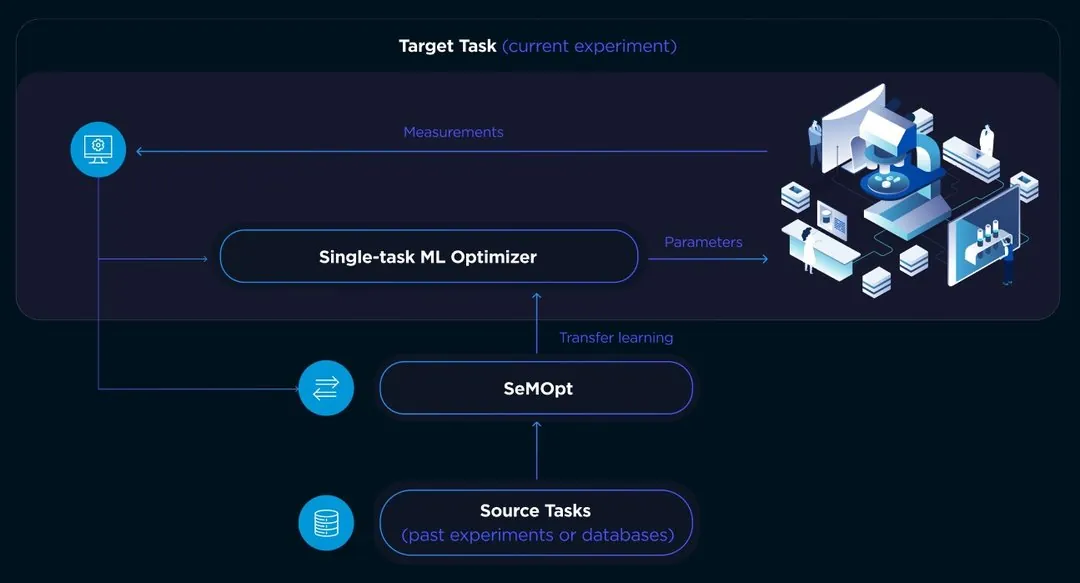
How Does SeMOpt Work?

Semantic Memory Approach
SeMOpt mimics expert intuition, guiding optimization with relevant historical and contextual data.

Meta-Learning & Few-Shot Learning
Rapidly adapts to new unseen tasks or experimental settings with minimal data.

Compound Acquisition Function
Dynamically balances historical knowledge and new observations for optimal search.

Neural Processes (NPs)
Neural architecture that uses attention to relate new tasks to tasks in the training data.
Who is SeMOpt For?
SeMOpt is designed for scientists and innovators across industries that face many similar experimental tasks but have limited data for each individual task. Examples include:

Scientists, chemists, and researchers in pharma, biotech, cosmetics, flavors and fragrances, materials science, and chemistry.

R&D, innovation, and process teams seeking digital transformation and looking to move beyond manual, trial-and-error experimentation.
R&D, innovation, and process teams seeking digital transformation and looking to move beyond manual, trial-and-error experimentation.

Why SeMOpt?

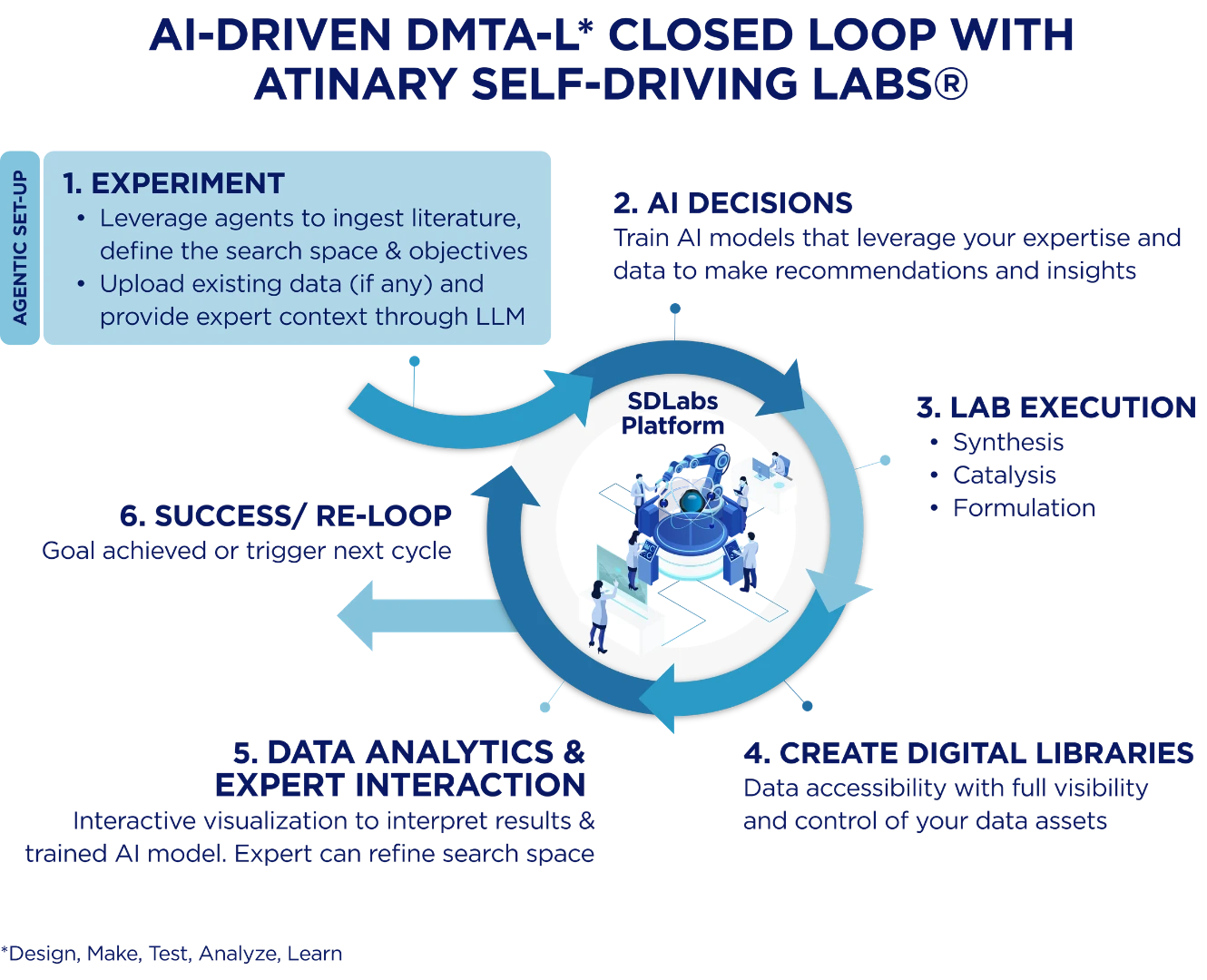
Connect Every Part of Your Lab—From Data to Devices
Atinary’s SDLabs platform is purpose-built to unify your entire R&D workflow, breaking down data silos and
enabling a truly digital, automated, and collaborative laboratory.
enabling a truly digital, automated, and collaborative laboratory.
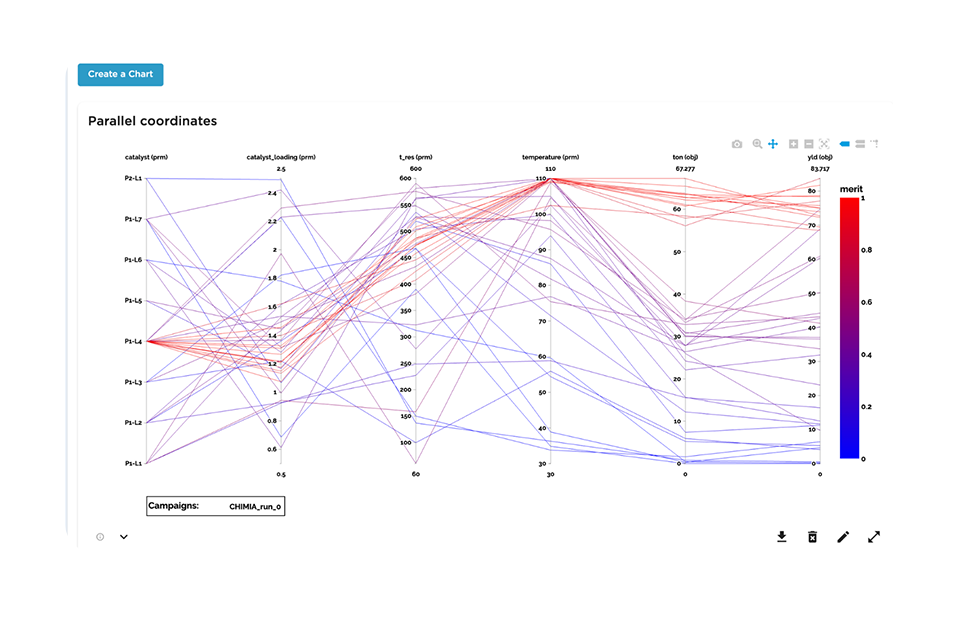
LIMS Compatibility
- Instantly connect SDLabs with your Laboratory Information Management System (LIMS). All experiment data—conditions, results, metadata—is automatically captured and accessible in one secure, searchable hub. No more manual data transfers, lost files, or fragmented records.
- Example: Chemists can retrieve or analyze any historical experiment in seconds, supporting audits, compliance, and faster innovation.
Robotics & Automation Hardware
- Seamlessly link SDLabs to lab robots, liquid handlers, and reactors for a closed-loop, fully autonomous experimentation process.
Real-World Integrations
- IBM’s RoboRXN/Chemspeed: AI algorithms in SDLabs send experiment designs directly to the robot; results are automatically fed back for instant re-optimization.
- ETH Zurich Catalyst Optimization: Robotic platforms execute batches of 24 experiments; results sync with SDLabs for next-iteration planning—no manual intervention.
- Oligonucleotide Synthesis: SDLabs supports integration with Chemspeed and Unchained Labs robots, streamlining complex workflows.
- ViperLab Project: Robotic platforms, guided by SDLabs’ Falcon algorithm, optimize perovskite solar cell fabrication—demonstrating Atinary’s impact on advanced materials R&D.
Unified, ML-Ready Data
- SDLabs eliminates information silos—every data point from every experiment is stored, organized, and ready for analysis or machine learning. This makes knowledge sharing across teams effortless and ensures robust, reproducible science.
Reproducibility & Audit Trails
- Automatic, immutable logging of every experiment’s conditions, parameters, and results—critical for regulatory compliance and confident, repeatable discoveries.
No-Code to Pro-Code
- While SDLabs empowers chemists with its no-code interface, advanced users and IT teams can leverage robust APIs and SDKs for custom integrations, automated workflows, or linking with legacy systems.
- Academic researchers can access free tools like the Scientia API to connect their own data sources and accelerate collaboration.
Future-Proof Compatibility
- SDLabs is designed to evolve with your lab—whether you’re adding new robotics, upgrading LIMS, or developing proprietary workflows.

Compliance-Ready
- SDLabs is built with robust data security controls, including encryption, access management, and audit trails, supporting global privacy regulations (GDPR, CCPA, etc.).
IP Protection
- Your proprietary formulations and research data is always encrypted.
Cloud Deployment
- Flexible options to meet your IT and compliance requirements.
What it means:
Innovate with confidence—knowing your data, IP, and customer privacy are safeguarded at every step.